


Insomnia vs. other sleep disorders: solutions
Written on December 3, 2025, by Pauline de Santarome
L’insomnie est l’un des troubles du sommeil les plus fréquents et peut transformer vos nuits en un vrai parcours du combattant. 1 français sur 3 y est confronté. Difficulté d’endormissement, réveils nocturnes ou sommeil non réparateur, la vie quotidienne peut rapidement être affectée par la fatigue et le manque de concentration. Le stress chronique, les écrans, le travail en horaires décalés ou une mauvaise alimentation perturbent le cycle de sommeil.
But insomnia is not the only sleep disorder: sleep apnea, excessive daytime sleepiness, circadian rhythm disorders, and parasomnias can also disrupt sleep and impact quality of life.
Les plantes médicinales (phytothérapie), l'homéopathie les huiles essentielles et une meilleure hygiène du sommeil peuvent réellement faire la différence sur vos nuits. Pour compléter ces approches, il est aussi possible d’agir de l’intérieur avec des compléments alimentaires pour bien dormir.

What is insomnia?
Insomnia is defined asdifficulty sleeping sufficiently or properly despite favorable conditions. It can be temporary, lasting a few days, or chronic, occurring three or more nights a week for several weeks.
Sleep can be disrupted by other disorders, among the most common of which are:
Sleep apnea: frequent breathing pauses during the night, leading to poor oxygenation and fragmented sleep.
Snoring: often associated with partial obstruction of the airways and repeated nighttime awakenings.
Parasomnias: sleepwalking, nightmares, or involuntary movements occurring mainly during REM sleep.
Restless legs syndrome: an irresistible urge to move the legs, which disrupts falling asleep and sleep quality.
If you regularly suffer from insomnia or any other sleep disorder, consulting a doctor or sleep medicine specialist is essential to identify the cause and consider appropriate treatment.

Symptoms and causes of insomnia
The main symptoms of insomnia include:
Difficulty falling asleep and waking up early or during the night.
Light or non-restorative sleep, with sleep fragmentation.
Persistent fatigue during the day, daytime sleepiness, and lack of alertness.
Irritability, anxiety, mood swings, difficulty concentrating, and memory problems.
There are many causes of insomnia, and they often occur in combination:
Facteurs psychologiques : stress, anxiété, dépression ou troubles psychiques associés.
Hygiène de vie : horaire de coucher irrégulier, exposition à la lumière bleue, écran le soir, manque d’activité physique.
Médicaments et substances : stimulants, antidépresseurs, drogues, alcool ou caféine en fin de journée.
Pathologies médicales : douleurs chroniques, troubles respiratoires comme l’apnée du sommeil ou syndrome des jambes sans repos.
Insomnia is therefore a complex condition that affects mental health, circadian rhythm, and sleep quality, with consequences for alertness, memory, and behavior during the day.
Symptoms and causes of other sleep disorders
Sleep disorders go far beyond insomnia and can be classified according to their type:
Respiratory disorders: Sleep apnea causes breathing interruptions and poor oxygenation at night, leading to fatigue, excessive daytime sleepiness, and cardiovascular risk. Snoring is often associated with sleep apnea and disrupts sleep.
Circadian rhythm disorders: sleep comes too early or too late (delayed sleep phase or jet lag), disrupting the biological clock. This leads to difficulty falling asleep, daytime sleepiness, and poor sleep quality.
Hypersomnia and narcolepsy: Some people suffer from excessive sleepiness, with episodes of uncontrollable sleep and sometimes sleep paralysis.
Motor and behavioral disorders: restless legs syndrome, sleepwalking, and certain parasomnias cause involuntary movements, irresistible sensations in the legs, or strange behaviors during REM sleep.
The causes can be biological (hormones, genetics, brain activity), physical (respiratory obstruction, chronic pain, cardiovascular disorders), or psychological (stress, anxiety, depression). The duration, frequency, and intensity of symptoms vary depending on the condition, making a medical examination and accurate diagnosis essential.

Approaches and treatments: what sets insomnia apart from other disorders
The treatment of insomnia and other sleep disorders varies depending on their cause.
Disorders |
Approaches and treatments |
Insomnia |
- Maintain a regular bedtime and wake-up schedule - Limit exposure to artificial light and screens in the evening - Create a calm, dark, and cool environment - Avoid alcohol and caffeine at the end of the day - Maintain regular and appropriate physical activity - Cognitive behavioral therapy (CBT) for chronic insomnia |
Respiratory disorders (e.g., sleep apnea) |
Use of medical devices such as CPAP machines to keep the airways open during the night |
Restless legs syndrome |
- Specific medications to decrease muscle tone and reduce nighttime movements |
Circadian rhythm disorders |
- Exposure to light to regulate the biological clock and restore a normal sleep pattern |
Consulting a healthcare professional is always recommended for targeted treatment, especially if the symptoms are chronic.

Dietary supplements to support sleep
To make it easier to fall asleep and improve sleep quality, dietary supplements can be used alongside good sleep hygiene practices.
Notre gamme SOMNIFOR vous accompagne au quotidien pour un sommeil profond et régénérant. Disponible en comprimés, gummies ou ampoules, elle réunit mélatonine, plantes (Pavot de Californie) et bourgeons (aubépine, tilleul, figuier) pour agir sur l’endormissement et le maintien du sommeil.
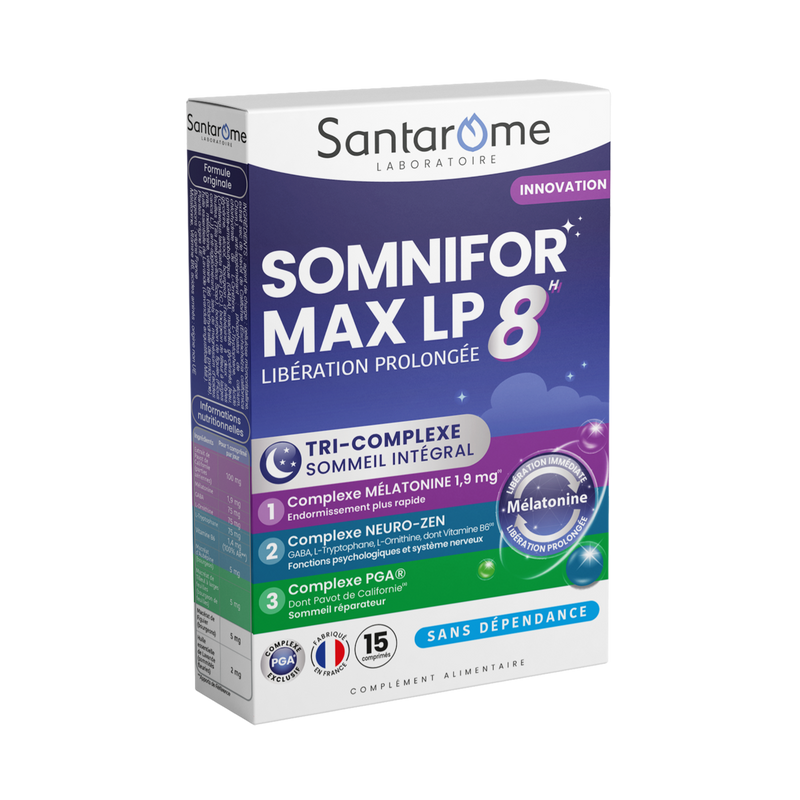
Pour les troubles du sommeil plus marqués, notre dernier complément SOMNIFOR MAX LP offre une approche complète, efficace et naturelle. Sa formule repose sur trois complexes exclusifs qui agissent sur plusieurs niveaux : détente musculaire, équilibre nerveux, régulation hormonale et amélioration globale du sommeil nocturne. SOMNIFOR MAX LP s’adresse aux personnes souffrant d’endormissement difficile ou de réveils fréquents, qui cherchent une alternative naturelle et sans accoutumance.
Découvrez aussi Somnifor Mélatonine 1,9mg en comprimés :
-
Action ciblée : Le SOMNIFOR MÉLATONINE 1,9 MG est un complément alimentaire conçu pour réduire le temps d'endormissement et atténuer les effets du décalage horaire.
-
Dosage optimal : Chaque comprimé apporte une dose élevée de 1,9 mg de mélatonine, dépassant largement le seuil d'efficacité recommandé (1 mg pour le sommeil et 0,5 mg pour le jet-lag).
- Format pratique : Il se présente sous la forme d'un comprimé au goût de menthe, à consommer juste avant le coucher pour un effet bénéfique immédiat.
Retrouver un sommeil réparateur passe souvent par des gestes simples et des solutions naturelles. Plantes médicinales, compléments alimentaires, méditations, thérapie, techniques de relaxation, toutes ces solutions naturelles sont une aide précieuse pour calmer le mental et détendre le corps. Faites confiance à Santarome et réconciliez votre corps et votre esprit, avec le repos.
★★★★★ - Chloe
SOMNIFOR MAX LP 8H
"Since I started taking this supplement, my sleep has been much more regular.I fall asleep more easily and stay asleep without waking up in the middle of the night."