

Natural solutions for insomnia: effective remedies
Written on December 3, 2025, by Pauline de Santarome
Did you know that nearly a third of French people suffer from sleep disorders? Insomnia affects more and more people in our modern society. Chronic stress, screens, shift work, and poor diet disrupt our sleep cycle. Faced with this problem, many people are reluctant to resort to traditional sleeping pills and their potential side effects. However, nature offers us natural, gentle, and effective solutions to promote restful sleep and restore peaceful nights.
Les plantes médicinales, les huiles essentielles et une meilleure hygiène du sommeil peuvent réellement faire la différence. Pour compléter ces approches, il est aussi possible d’agir de l’intérieur avec des compléments alimentaires sommeil.

Understanding insomnia and its natural causes
Insomnia can take many forms: difficulty falling asleep, frequent nighttime awakenings, waking up too early, or non-restorative sleep. To combat it effectively, you must first understand what causes it.
There are many reasons for this:
stress or anxiety
unbalanced lifestyle,
excess caffeine,
alcohol (which makes it easier to fall asleep but disrupts sleep)
too rich meals in the evening
or lack of exposure to natural light.
Une alimentation pauvre en nutriments essentiels, une carence en magnésium ou en vitamine B6, ou encore un déséquilibre du système nerveux peuvent aussi perturber la production de mélatonine, l’hormone du sommeil.
As you can see, insomnia often has multiple causes. Fortunately, natural remedies can tackle several issues at once!

Natural solutions to improve sleep
When it comes to sleep disorders, nature offers us a veritable arsenal of remedies. From dietary supplements to medicinal plants and essential oils, let's discover the most effective solutions together.
Plants: valerian, passionflower, hops, lemon balm, and hawthorn
Plants are often used as natural remedies to promote sleep, calm the mind, and make it easier to fall asleep. Here are the most widely studied:
Plant |
Properties |
Relaxing, sedative, anxiolytic plant, helps you fall asleep |
|
Contains flavonoids, calming, anxiolytic, improves sleep quality, often combined with valerian for mild to moderate insomnia. |
|
Hops |
Sedative, relaxing, enhances feelings of calm in the evening. |
Soothing, antispasmodic, acts on the central nervous system, promotes a feeling of relaxation before bedtime. |
|
Calms the cardiovascular and nervous systems |
These plants can be consumed as herbal tea in the evening, 30 minutes before bedtime, or in the form of capsules, tablets, or mother tincture. They are often more effective when used in combination, which is why they are frequently found together in dietary supplements.
These plants can be used alone or in combination. Contraindications and drug interactions must be taken into account, and a healthcare professional should be consulted in case of illness or if you are already taking medication.
Dietary supplements for insomnia
In some cases, deficiencies or imbalances can interfere with the proper functioning of the sleep regulation system. Dietary supplements help regulate the internal mechanisms of sleep, which are often disrupted by stress or nervous fatigue.
La mélatonine est naturellement produite par le cerveau en réponse à l’obscurité. En complément alimentaire, elle aide à synchroniser le cycle de sommeil et à réduire le temps d’endormissement. Pour être efficace, elle doit être prise 30 minutes à 1h avant le coucher (avec une dose entre 1 et 1,9 mg).
Le magnésium est un minéral essentiel pour la relaxation musculaire et nerveuse. Il aide à calmer l’irritabilité ou les tensions musculaires. Une cure de 3 mois est souvent recommandée, avec une prise le soir avant le coucher.
Vitamin B, and particularly vitamin B6, acts on the production of essential neurotransmitters such as serotonin, which has a positive effect on sleep. It helps regulate mood and promotes relaxation.
Omega-3 essential fatty acids support brain health and contribute to emotional balance.
Le tryptophane, acide aminé précurseur de la sérotonine, favorise naturellement la détente et un sommeil réparateur. Le corps ne pouvant le fabriquer, il doit être apporté par l'alimentation ou les compléments.
To enhance the effectiveness of these nutrients, it is helpful to eat a balanced and varied diet rich in legumes, dairy products, nuts, and foods high in essential nutrients.

Essential oils that are effective against insomnia
Essential oils effectively complement natural sleep remedies. Their olfactory power acts on the limbic system, the seat of emotions. Three of them stand out in particular:
Chamomile essential oilhas excellent calming and sedative properties. It relieves tension and reduces intrusive thoughts. It is particularly recommended for insomnia caused by stress or anxiety.
True lavender essential oil(Lavandula angustifolia) is best known for promoting sleep. It promotes muscle relaxation and lowers the heart rate.
Marjoram essential oilhelps calm the nervous system and relax the mind.
They can be diffused in the bedroom before bedtime, added to a warm bath, or applied to the temples and neck with massage, diluted in vegetable oil. Caution: essential oils are powerful and require precautions for use. They are not recommended for pregnant or breastfeeding women or young children.

Lifestyle habits to adopt for better sleep
No plant, oil, or supplement can replace a good sleep routine. Here are some specific tips to improve your sleep on a daily basis.
A good routine and a good sleep pattern
A regular sleep routine stabilizes the sleep cycle:
Going to bed and waking up at set times helps the brain to naturally secrete melatonin.
Avoiding screens one hour before bedtime, favoring soft lighting, and maintaining a cool temperature in the bedroom can help with difficulty falling asleep.
A mattress and pillow that are suited to your body type and sleeping habits make all the difference.
A calm ritual—reading, herbal tea, soft music—helps signal to the body that it's time to relax. If your environment is noisy, earplugs or a white noise machine may be helpful.
Relaxation techniques and stress management
Chronic stress severely disrupts sleep. Learning to release mental tension before bedtime is therefore essential. Relaxation techniques such asdeep breathing,meditation, orsophrologyhelp calm the nervous system and reduce anxiety.
A few minutes of slow, conscious breathing is enough to lower your heart rate and prepare your mind for rest.
Gentle practices such as yoga, stretching, or cardiac coherence complement these methods and reinforce stress management.
Diet and physical activity on sleep
Diet plays a key role in sleep quality. A light dinner, eaten at least two hours before bedtime, aids digestion and reduces nighttime awakenings.
Foods rich in tryptophan (bananas, brown rice, nuts, legumes, dairy products) support the production of serotonin and melatonin.
Reducing caffeine, alcohol, and fast sugars in the evening improves the quality of nighttime sleep.
Regular physical activity also helps regulate biological rhythms. Exercising every day, even for just 30 minutes, promotes sleep and restful sleep, but be careful not to exercise too late in the day. The ideal time to exercise is in the late afternoon, at least 3 hours before bedtime.

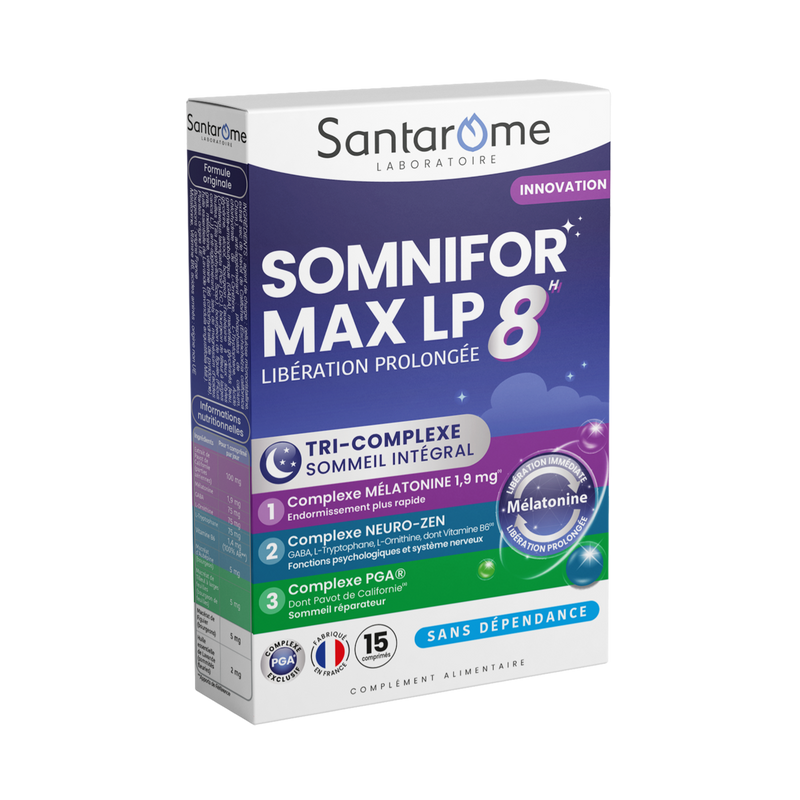
SOMNIFOR MAX LP 8H by Santarome: an ally against severe sleep disorders
For more severe sleep disorders, SOMNIFOR MAX LP offers a comprehensive and natural approach. Its formula is based on three exclusive complexes that act on the entire sleep cycle and nervous system:
A dual-release melatonin complex combines immediate action with prolonged release over 8 hours.
An exclusive neuro-zen complex containing GABA, L-Tryptophan, L-Ornithine, and Vitamin B6. This blend reduces mental agitation, supports emotional balance, and improves sleep quality.
A PGA complex combining California poppy, a trio of buds, and lavender essential oil.
This comprehensive formula acts on sleep onset, sleep quality, and sleep duration, for truly restorative nights.
The effectiveness of natural remedies often requires a little patience. Generally, allow 2 to 3 weeks of regular use before you feel the full benefits.
If, despite everything, your sleep problems persist for more than three months despite rigorously following this advice, consult a healthcare professional. Some cases of insomnia may be linked to more serious disorders that require specific treatment.
Sleep is a fundamental pillar of our health, just like diet and physical activity. Taking care of it means investing in your overall well-being and quality of life. So don't wait any longer to implement these natural solutions and finally enjoy peaceful, restful nights!

★★★★★ - Chloe
SOMNIFOR MAX LP 8H
"Since I started taking this supplement, my sleep has been much more regular.I fall asleep more easily and stay asleep without waking up in the middle of the night."