

Natural remedies to alleviate premenstrual syndrome
Written on 10/21/2025 by Pauline de Santarome
The figures are impressive: 20 to 50% of women in France suffer from premenstrual syndrome, or PMS.
And in 5% of cases, the syndrome takes a severe form, manifesting itself in symptoms very similar to those of major depression. This is referred to as premenstrual dysphoric disorder.
Stomach aches, mood swings, fatigue... Premenstrual syndrome can be very disruptive to daily life: some women find it difficult to go about their normal routine during this period, which generally lasts between two and three days each month.
Good news: in most cases, premenstrual syndrome is not inevitable. Find out everything you need to know about these typically female problems and how to relieve them, particularly with natural dietary supplements.
What is premenstrual syndrome?
Premenstrual syndrome is linked to the female cycle: it starts a few days before menstruation and ends as soon as menstruation begins. Very unpleasant on a daily basis, even truly painful, premenstrual syndrome varies in intensity depending on the woman affected.
It is due to hormonal changes: during a cycle, estrogen and progesterone levels tend to vary significantly. Progesterone levels drop considerably, while estrogen levels remain comparatively high. This is known as relative hyperestrogenism.
This fluctuation has a physical impact on some women.
In addition, hormonal changes also affect the production of serotonin, the hormone that allows hormones to communicate and regulates mood.
Finally, changes in estrogen and progesterone levels cause a difference in the regulation of salt and water in the body. This change could explain feelings of bloating.
It should be noted that in the months leading up to menopause (perimenopause), a much larger number of women complain of premenstrual syndrome.

What are the most common symptoms of premenstrual syndrome?
The symptoms of premenstrual syndrome vary greatly from one woman to another. However, there are some fairly common symptoms:
- Abdomen: Before menstruation, the uterus contracts to prepare to expel blood and fragments of mucous membrane (known as the endometrium). These contractions of the uterus cause very unpleasant cramping sensations. When these cramps are particularly painful, this is referred to as dysmenorrhea. In this case, it is advisable to consult a specialist.
- At the same time, abdominal contractions are intensified because before menstruation, the body produces large amounts of hormones that trigger contractions: prostaglandins.
- Lower back: Uterine contractions sometimes cut off the oxygen supply to nearby muscles, particularly those in the back, causing lower back pain.
- Mood swings: As we have seen, female hormones fluctuate throughout the cycle and influence serotonin production in particular. This hormone has a considerable influence on overall mood. It should also be noted that hormonal fluctuations during the cycle have a direct impact on a woman's mood. During the first phase of the cycle, estrogen levels increase and dominate progesterone. Then, as the cycle progresses, progesterone becomes increasingly important, causing fatigue and stress.
If you experience these symptoms in a way that is very debilitating and painful, preventing you from living a normal daily life and causing you significant suffering, we urge you to consult a doctor as soon as possible. They will be able to help you find a solution to your problem.

What are some natural remedies for premenstrual syndrome?
Some natural techniques can provide significant relief from premenstrual syndrome.
If you suffer from back and stomach pain during your premenstrual period, a massage can do you a world of good. We recommend a massage with rosemary verbenone essential oil.
Feel free to do some stretching and/or yoga to relieve the pain, and take a leisurely walk to exercise your back muscles without straining them. Avoid any overly strenuous physical exercise.
Heat sources on your stomach (hot water bottle, etc.) can also temporarily relieve the discomfort associated with premenstrual syndrome.
Certain foods can also help relieve the discomfort of premenstrual syndrome, particularly those rich in vitamins B6 and E. It is recommended that you eat more starchy foods, cooked vegetables, and vegetable oils. Limit your intake of refined sugar, tobacco, and alcohol for a few days.
Santarome dietary supplements 🌱
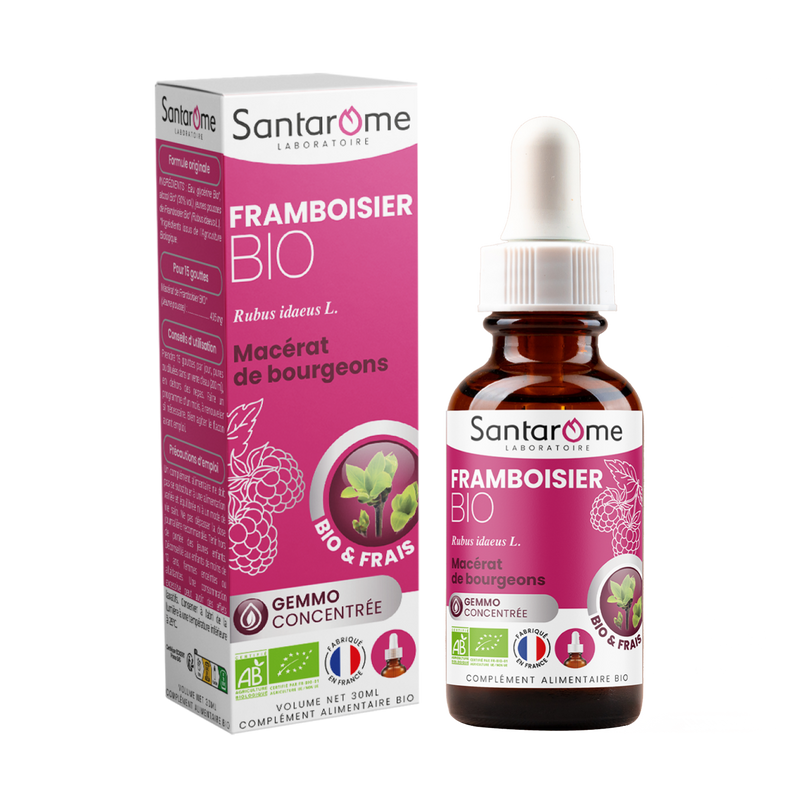
Organic Organic Raspberry Bud Macerate is a dietary supplement that highlights the benefits of raspberry for women's well-being, particularly during menstruation. Traditionally known as the "woman's bud," raspberry, in the form of organic bud macerate, is renowned for helping to regulate female hormonal balance.
It is therefore used to relieve menstrual pain, cycle disorders, andmenopause-related discomfort. Its properties are thought to act on the hormonal system by promoting the production of estrogen and progesterone when necessary, and it is believed to have an antispasmodic effect that could help relax the uterine muscles and thus reduce menstrual cramps.