


Ashwagandha

Ashwagandha is a medicinal plant belonging to the Solanaceae family and the genus Withania somnifera. Better known as "white ginseng"or "Indian ginseng"due to its resemblance, it is an essential remedy in Ayurvedic medicine, particularly for its stress-reducing and nervous system-supporting benefits. Used for thousands of years, it is renowned for its soothing action, its ability to strengthen the immune system, and promote vitality. Even today, ashwagandha is consumed in various forms (powder, capsules, root extract) as a a dietary supplement, in accordance with regulated use and with certain precautions.

History and habitat    

Native to India, ashwagandha now grows mainly in the arid lands of Asia (India, Afghanistan, Pakistan), but also in Europe (Spain, Sicily, etc.) due to the high demand for this adaptogenic plant. It has been mentioned since more than 1,000 BC in Ayurvedic medicine texts as a natural remedy that promotes balance between body and mind.

The main varieties of ashwagandha

  • Ashwagandha KSM-66: produced using a patented extraction process, this variety concentrates withanolides, which are responsible for its adaptogenic properties.

  • Ashwagandha Sensoril: also rich in withanolides, it offers optimal absorption and a enhanced effect on reducing anxiety and supporting the immune system.

  • Other varieties such as Ashwagandha Arjuna or Shatavari are less common but interesting in a complementary approach.
Section image

Appearance of Ashwagandha

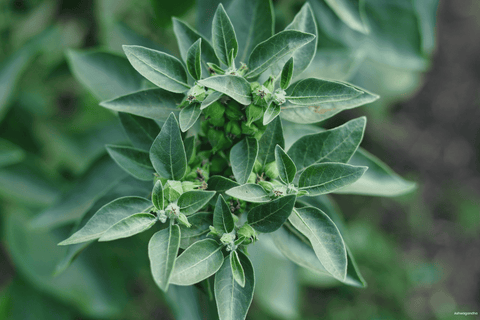
Withania somnifera is a small, sturdy shrub that grows to a height of about one meter. Its green flowers produce small red-orange berries. However, it is mainly its roots that contain most of its beneficial properties. Dried and then ground into powder or used in extract or capsule form, they are the basis of modern supplements.

The leaves, although less well known, also have an interesting effect on mental health and can be used to promote relaxation. The whole plant perfectly reflects its adaptogenic and revitalizing properties, contributing to energy, fertility, and the reproductive system.

Section image

The active compounds in Ashwagandha

The beneficial effects of Ashwagandha on the body are due to its richness in active compounds, the main ones being:

  • Withanolides: this group of molecules is naturally present in the plant and provides adaptogenic, anti-inflammatory, and antioxidant properties.
  • Alkaloids: Ashwagandha contains several alkaloids, including withanine and somnine. These compounds have relaxing effects.
  • Sitoindosides: these molecules also have adaptogenic properties, which help the body to better adapt to stress. They also appear to stimulate the immune system.
  • Other compounds: Ashwagandha is also rich in iron, potassium nitrate, amino acids, fatty acids, sterols, and other compounds that may contribute to its beneficial effects.
Section image

The benefits of ashwagandha

Ashwagandha has many virtues that have made this adaptogenic plant a popular medicine for years. Indeed, the plant helps to:

  • Reduce stress and anxiety by acting on cortisol levels (the stress hormone).
  • Act as an anti-inflammatory
  • Improve athletic performance. It allows the body to optimize oxygen use in order to regulate breathing and strengthen muscle mass.
  • Acting on libido. Ashwagandha is an aphrodisiac that stimulates libido, vitality, and hormone production in men.
  • Boost fertility and testosterone in men by improving the functioning of the reproductive system.
  • Promote restful sleep and combat insomnia by making it easier to fall asleep and improving sleep quality.
  • Strengthen and fortify the scalp: Stress is well known to cause hair loss or promote the appearance of split ends and gray hair. Ashwagandha helps hair growth and slows down hair loss and the appearance of hair problems.
  • Contribute to mental health, improved concentration and memory, and cognitive performance.
  • Provide support in cases of chronic fatigue, restoring energy and overall balance.
  • Fighting many infections
  • Fighting diabetes
  • Pain relief: it is an excellent antiseptic
  • Finally, Withania Somnifera is also a pain reliever that reduces menopause symptoms and hot flashes.
Section image

The properties of Ashwagandha

  1. Adaptogenic action: Withania somnifera is an adaptogenic plant, meaning it stimulates the body's resistance to stress and promotes emotional balance.

  2. Regenerative and fortifying properties: Ashwagandha has a revitalizing effect on the human body. In cases of fatigue or significant stress, this plant is ideal for counteracting the "energy slump" effect. In addition, it strengthens the human body's immune defenses. Athletes greatly appreciate this plant because it is productive and strengthens muscle mass.

  3. Calming and anti-stress properties: Withania Somnifera also helps to combat stress, particularly during crucial periods such as exams or tax season, while optimizing physical and intellectual performance. It targets and calms cortisol, the stress hormone. It also influences metabolism and acts as an antidepressant. It is often recommended for sleep disorders.

  4. Anti-inflammatory properties: Ashwagandha is very effective in treating certain inflammatory diseases, such as arthritis. This plant helps to produce antibodies more intensively in order to fight the disease.

  5. Neuroprotective properties: Several studies have demonstrated the qualities of dried ashwagandha roots. Withania somnifera optimizes nerve development and protects cells. The plant can be taken preventively and fights destructive diseases such as Alzheimer's and Parkinson's. This plant also helps fight tuberculosis and hepatitis.

  6. Neuro-cancer properties: Ashwagandha is used in the treatment and prevention of cancer. The properties of its roots enable it to infiltrate cells and combat breast, lung, and stomach cancers. The production of white blood cells resulting from treatment enables the immune system to compete with the progression of cancer.

Section image

How to use Ashwagandha?

The use of ashwagandha depends on the form chosen:

  • Powder (mixed with water, milk, or in a collagen bar).
  • Standardized capsules containing Withania somnifera root extract.
  • Concentrated extracts such as Ashwagandha KSM-66 or Ashwagandha Sensoril.


The recommended dosage varies depending on the product (consult a doctor or expert before use). In general, a daily dose of 300 to 600 mg is recommended for its effects on stress, sleep quality, and mental health.

The Stress Control Bio capsules from Santarome are concentrated in ashwagandha. Discover the full range of Santarome dietary supplements for stress and anxiety. 

Blended with saffron and hawthorn to combat anxiety and promote sleep, these capsules are an effective remedy for peace of mind. It is recommended to take 2 capsules per day, diluted in a 20cl glass of water.

Section image

What are the dangers and side effects of Ashwagandha?

Ashwagandha is generally well tolerated, but some side effects may occur, including drowsiness, digestive problems, and interactions with certain medications. That is why it is important to follow the precautions for use and consult a healthcare professional before starting any treatment. As a general rule, the plant is not recommended for pregnant or breastfeeding women, or young children. It should also be avoided in cases of liver disease or treatment with hypnotic or immunosuppressive drugs.

User feedback highlights reduced anxiety, improved sleep quality, and a marked improvement in vitality. However, each body reacts differently, and it is necessary to adapt the treatment to your own system.

Precautions for use and side effects  

The use of ashwagandha is strongly discouraged for:

  • Pregnant women
  • Breastfeeding women
  • Young children
  • People undergoing antidepressant treatment
  • People with hyperthyroidism
  • People with allergies related to nightshades (tomatoes, eggplants, chili peppers, bell peppers)

Ashwagandha has no side effects. However, in case of overdose, intestinal disorders may occur, as well as drowsiness. It is therefore essential to follow the recommended dosage.

Section image

Comparison of Ashwagandha with other adaptogens

Ashwagandha, ginseng, rhodiola, and maca all belong to the category of adaptogens, plants known to help the body adapt to stress. Although they share common properties, such as stress management, immune system support, and cognitive performance enhancement, they also differ in certain effects and specific characteristics.

Ashwagandha

Reduces stress, anxiety, and fatigue; improves sleep, concentration, and muscle strength; boosts the immune system.

Contains withanolides, bioactive compounds with antioxidant and anti-inflammatory properties.

Ginseng

Improves energy, concentration, and memory; boosts the immune system; enhances libido.

Different varieties (Asian, American) with distinct properties.

Rhodiola

Reduces stress, fatigue, and anxiety; improves concentration, mood, and physical performance

Acts on neurotransmitters, such as serotonin and dopamine

Maca

Increases libido and fertility; improves mood, energy, and endurance; strengthens bone mass.

Contains macamides, bioactive compounds with energizing properties.

Frequently Asked Questions

Didn't find the answer you were looking for?

Contact us