


Napping: an ally or an obstacle to restful nights of sleep?
Written on 08/20/2025 by Pauline de Santarome
While naps are often seen as a way to recharge during the day, they can also disrupt nighttime sleep. So should we ban them or embrace them? The answer is simple: it all depends on how long they are and when they are taken.
Santarome sheds light on the subject! Discover how to enjoy a beneficial nap without impacting your nights by opting for natural solutions such as dietary supplements for a good night's sleep.

The benefits of taking a nap
A beneficial nap, taken at the right time, offers many advantages:
Improved vigilance
Napping helps combat daytime sleepiness and boost alertness. In 2019, a NASA study showed that a 20-minute nap can improve productivity by 34% and alertness by 54%.
Improved concentration
With your brain recharged, napping makes it easier to focus on the tasks at hand. It improves accuracy and decision-making, thereby enhancing cognitive performance.
Memory consolidation
Napping optimizes the processing and consolidation of learned information. It promotes short- and long-term memory and enhances learning abilities.
Better stress management
By reducing tension and anxiety, napping acts as a real stress reliever. It allows you to relax and regain a precious inner calm to face the challenges of everyday life.
Improved mood and creativity
Napping can also have a positive impact on mood and creativity. By resting, you are better able to manage your emotions and find innovative solutions to problems you encounter.
The disadvantages of taking a nap
While napping is an excellent way to recharge your batteries during the day, it can also have negative effects if not done properly. Here are some of the disadvantages of napping:
Delayed sleep onset in the evening
A nap that is too long or too late in the day can disrupt your circadian rhythm and delay falling asleep at night. This can lead to insomnia and increased fatigue the next day.
Reducing the duration of deep sleep
Napping can interfere with nighttime sleep, especially if done too late in the day. This can reduce the amount of deep sleep, which is essential for physical and cognitive recovery.
Decreased cognitive and physical performance after waking up
Although napping may initially provide a feeling of refreshment, some people may experience drowsiness and confusion after napping, which can affect their cognitive and physical performance for a short period of time.
Addiction to napping
If napping becomes a systematic reflex every time you feel tired, it can create a dependency, which can not only disrupt your daily routine but also reduce your efficiency in everyday activities. It is therefore important not to overdo it and to be content with short, occasional naps.
⭐⭐⭐⭐⭐ - Laura
I'm sleeping better again!
I fall asleep very quickly and have finally gotten back into a sleep routine. I highly recommend it!

When should you take a nap?
There is no ideal time to take a nap, as a good nap depends on several factors, including your circadian rhythm, your schedule, your sleep habits, or immediate signs of sleepiness.
In general, napping is recommended after lunch. This time of day, usually between 1 p.m. and 3 p.m., corresponds to a natural drop in energy and alertness due to digestion, but above all to a physiological need that arises 12 hours after midnight. Taking advantage of this period for a 20- to 30-minute nap can invigorate the mind and improve concentration for the rest of the day.
However, for people who have atypical work schedules or shifted circadian rhythms, the time of the nap may vary. For example, night shift workers may take a nap before work to increase their alertness and performance.
Avoid napping late in the day, i.e., after 4 p.m. Napping too late in the day can prevent you from falling asleep easily at night.
3 tips for determining the ideal time to take a nap
Listen to your body: the first indicator is your own fatigue. If you feel tired in the early or mid-afternoon, it's a sign that your body needs rest.
Respect your chronotype: your chronotype is your natural circadian rhythm. If you are an early riser (4-6 a.m.), a morning nap may suit you. If you are more of a night owl (1-2 a.m.), a nap in the early afternoon will be more beneficial.
Consider your sleep habits: if you have trouble falling asleep at night, it is best not to take a nap or to shorten it.
Natural solutions for quality sleep
Quality sleep is essential for overall well-being. But many factors can disrupt our sleep, such as stress, anxiety, poor diet, or an irregular lifestyle. Fortunately, there are natural solutions to improve sleep quality.
A healthy lifestyle
A healthy, balanced diet: avoid heavy meals and alcohol before bedtime. Choose foods rich in tryptophan, an amino acid precursor to melatonin, the sleep hormone. It is found in dairy products, eggs, bananas, and nuts. Discover Santarome's range of melatonin dietary supplements.
Regular exercise: engage in physical activity during the day, but avoid intense exercise late in the evening.
Regular sleep schedule: Go to bed and wake up at the same time every day, even on weekends. This helps regulate your circadian rhythm.
An environment conducive to sleep: your bedroom should be dark, quiet, and cool. Avoid screens before bedtime. The blue light emitted by these devices can disrupt melatonin production.
Dietary supplements
If you have tried to improve your lifestyle and still suffer from insomnia, dietary supplements may be a solution.
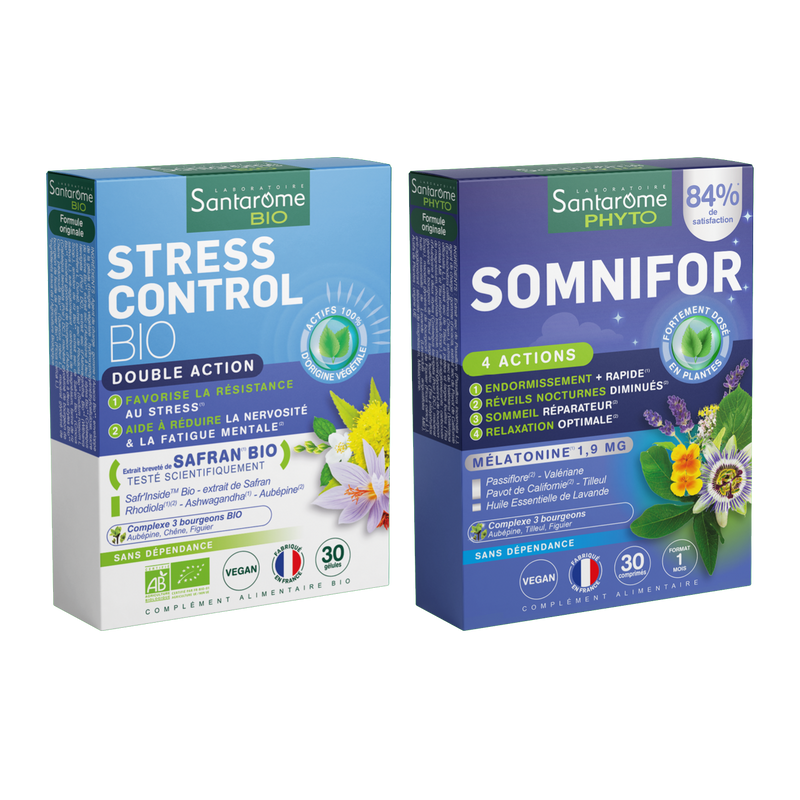
Santarome offers adietary supplement in tablet form containing melatonin and Somnifor 4 ACTIONSherbal ingredients.
This dietary supplement helps to:
Fall asleep quickly
Get deeper, more restful sleep
Feel more relaxed
Reducing the effects of stress and anxiety
Somnifor is a non-addictive product with no side effects.
Remember that the key to quality sleep lies in a holistic approach. Take care of your body and mind, adopt a healthy sleep routine, and discover the natural solutions that work best for you to restore restful sleep.