


The five habits that prevent you from sleeping well
Written on 08/02/2025 by Pauline de Santarome
Do you have trouble sleeping? Do you have difficulty falling asleep or sufferfrom insomnia? Do you feel tired as soon as you wake up? You are far from alone in this situation: sleep problems affect one in three people in France.
Our sleep time has decreased significantly over the last decade. This situation can have significant consequences: too little sleep weakens the body and makes you more vulnerable to illness. And for drivers, lack of sleep can also be very dangerous: drowsiness at the wheel is the leading cause of road accidents.
Here are a few suggestions for getting a good night's sleep and starting the day off on the right foot.
No screens after 8 p.m. 📱
More than one in two French people do not turn off their cell phones at night, and at least one in five leave them on standby. These habits are detrimental to sleep.
If you manage to make the right decision to turn off your screens in the evening, you will quickly see the benefits of this habit: cell phones can negatively impactsleep quality for various reasons:
First, screens emit blue light, which sends "daytime" signals to the retina. The brain interprets these signals by not releasing melatonin, the sleep hormone, which explains why people who look at their screens in the evening have poor quality sleep. That's why, even with very limited lighting, it is strongly recommended not to fall asleep with a phone or tablet. Opt for books or soft music instead.
In addition, the information delivered by cell phones overstimulates the brain and keeps it in a state of cognitive arousal that does not prepare it for sleep. This is known as the sentinel effect.
Finally, the issue of waves emitted by cell phones has been the subject of numerous studies and has not been strictly defined. Even though their impact on the brain has not been established, it is advisable to put your phone in airplane mode before going to bed.
What are the best sleeping positions? 💤
Sleeping comfortably and deeply is essential for our well-being. Did you know that the position in which you sleep can have an impact on the quality of your sleep? Although there is no universal ideal position, certain positions are known to promote restful sleep.
On the back: promotes proper spinal alignment, relieves body tension, and prevents reflux and wrinkles.
On your side: promotes better breathing, reduces snoring and lower back pain. Place a pillow between your legs to improve body alignment.
In the fetal position: provides a comforting feeling, reduces snoring and lower back pain. Be careful not to curl up too much to avoid muscle tension.
Falling asleep after midnight 🕛
Is sleep before midnight more restorative than sleep after midnight? The answer is nuanced: our sleep is governed by circadian cycles, which alternate between light sleep and deeper sleep.
The first sleep cycle is the most important, as this is when our cardiovascular functions slow down.
It is therefore the start of our nights that is essential to ensuring peaceful nights, not bedtime.
However, falling asleep in the middle of the night will not be as restful as going to bed at 11 p.m., even if the duration of your sleep is the same.
In fact, your internal clock recognizes that the night will be shorter: when you go to bed in the middle of the night, your body "skips" the first sleep cycle and goes straight into REM sleep, which is lighter and less restorative.
In any case, the key to ensuring a peaceful night's sleep is to go to bed at regular times. Your body will take note of your habits and adjust its cycles accordingly.

Avoid caffeine and stimulating beverages after 5 p.m. ☕
Rather than coffee, we recommend drinking soothing beverages such as herbal teas made from plants with universally recognized sedative properties:
Some herbal teas contain plants that you will find in Santarome Bio'ssleep supplements:
Chamomile
verbena
Passionflower
…
For maximum effectiveness, we recommend drinking your herbal tea half an hour to an hour before going to sleep.
Avoid meals that are too heavy and difficult to digest 🍔
If you have trouble falling asleep after a good meal with a little alcohol, that's normal: your body is working to digest, and your body temperature rises.
We recommend that you opt for light meals, without red meat and with little or no alcohol.
Do you feel heavy and uncomfortable at bedtime? A cup of chamomile tea will restore your body and help you fall asleep more peacefully.
Sleeping in a room that is too hot or too cold ☀ ❄
Between 16 and 18°C is considered the ideal temperature forfalling asleep. This is because our brain spontaneously acts as a thermal regulator when wefall asleep.
A poorly heated room makesit difficult to fall asleep, as your body has to produce energy to warm itself up. But an overheated room is not beneficial either, as excessive temperatures can cause headaches and disrupt circadian cycles.
Please note that for babies, the rules are slightly different: a temperature of 64 to 68°F is ideal.
If you recognize yourself in any of these habits, you now know how to avoid them and get back to restful nights. Do you experience sleep disorders that significantly affect your daily well-being? A course of Santarome Bio Sleep dietary supplements could be very beneficial.
Dietary supplements for better sleep 💊
Dietary supplements have become a popular solution for improving sleep quality.
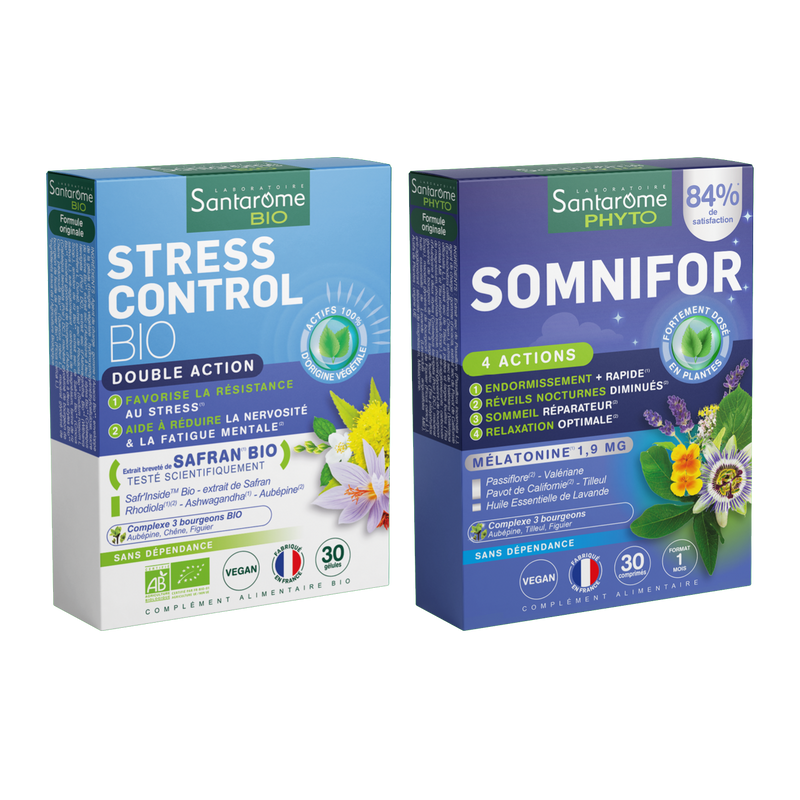
Discover Somnifor 4 Actions from Santarome Bio, a product that offers a natural solution to improve your sleep. This formula combines a selection of natural plants such as passionflower, valerian, California poppy, and linden. With Somnifor, you can enjoy the beneficial effects of these plants on your sleep, without harmful chemicals, thanks to their 100% organic and 100% vegan composition.