

Sleeping peacefully, what bliss!
Written on December 7, 2025, by Pauline de Santarome
Under pressure from our fast-paced lifestyles, sleep is becoming a major societal issue in the 21st century. In 50 years, French people have lost 1.5 hours of sleep: a figure that explains why a quarter of us are permanently sleep deprived (1). So, who is to blame?
It is impossible to pinpoint a single cause. The decline in the quantity—and quality—of sleep is most often the result of a combination of factors that become established in our daily lives over the long term.
Faced with these sleep-related challenges, using a dietary supplement to sleep better may be an option worth considering. How can these products help improve sleep quality and remedy this gradual deterioration in nighttime rest?
Eating well and exercising is good...
...but let's not forget to sleep!
We are swept up in a whirlwind of activities: work, leisure activities, outings, errands... Being "present" at every moment forces us to chip away at our rest time, whenthe irresistible appeal of screens doesn't push us to stay up late! These devices produce blue light, exposure to which disrupts the secretion of melatonin: the hormone that induces sleep and regulates sleep patterns.
We readily sacrifice a few minutes of sleep here and there, believing that we can make up for it at the weekend... Unfortunately, two days are not always enough to compensate for the sleep debt accumulated during the week... But let's not be fatalistic, we can take control of our sleep!

Did you know? Sleep cannot be improvised!
We sleep an average of 7 hours per night (8 hours on weekends): a duration that varies depending on the individual.
But whether you are a light sleeper or a heavy sleeper, sleep always follows the same pattern:
1. Light slow-wave sleep: we yawn and become numb. Breathing and heart rate slow down. This is when we fall asleep.
2. Deep slow-wave sleep: the brain no longer perceives anything, the body recovers from physical fatigue, and the immune system regenerates.
3. REM sleep: the muscles are still relaxed, but the brain becomes active and dreams are formed. This is an essential stage for emotional management. Psychological well-being and memory depend on it.The succession of these three phases constitutes a sleep cycle... And a good night's sleep includes 4 to 5 complete cycles! While slow-wave sleep predominates at the beginning of the night, it gradually fades away in favor of REM sleep, which flourishes just before waking up.
Sleeping well: a vital need
Sleep acts as a regulator for the body. It is essential, allowing the brain to rid itself of toxins and regenerate.
Our "onboard computer" also needs sleep to reorganize neural connections. More generally, quality sleep contributes to the overall well-being of the body, facilitates memory, stimulates growth, and activates the regeneration of bones, muscles, and skin.
And, as you may have guessed, a well-rested body develops greater resistance to stress and disease! Sleep even affects blood sugar levels by regulating the hormones that control eating behavior.

Wake up the sleeper in you!
Your health capital is also in your bed... so don't hesitate to set aside time for sleep!
Of course, you'll fall asleep more easily if you turn off your screens an hour before bedtime and eat dinner early. The body likes routine, so do it a favor by going to bed at regular times.
If you have trouble falling asleep, don't give in to the anxiety of a sleepless night!Try relaxation and meditation: these two techniques will help you find a deep sense of well-being that will let you drift gently into the arms of Morpheus.
Smart tips:Keep your feet (and hands) warm: this helps reduce your core body temperature and promotes sleep.
"Press" yourself! The earlobe, wrists, and arch of the foot are home to acupuncture points: massage them gently to relax. Breathe... Take a deep breath and fill your belly. Hold for a few moments and exhale slowly through your mouth.
Create a nighttime atmosphere. Gradually dim the lights as the evening progresses to reduce light stimulation of the brain.
Don't toss and turn in bed! If you can't fall asleep after half an hour,get up and do a quiet activity in dim light... you'll eventually get tired.
Hide your clock radio. Its illuminated numbers attract your attention, and seeing the time passing can cause stress. Hiding the time will help you disconnect.
⭐⭐⭐⭐⭐ - Laura
I'm sleeping better again!
I fall asleep very quickly and have finally gotten back into a sleep routine. I highly recommend it!

Plants can help us
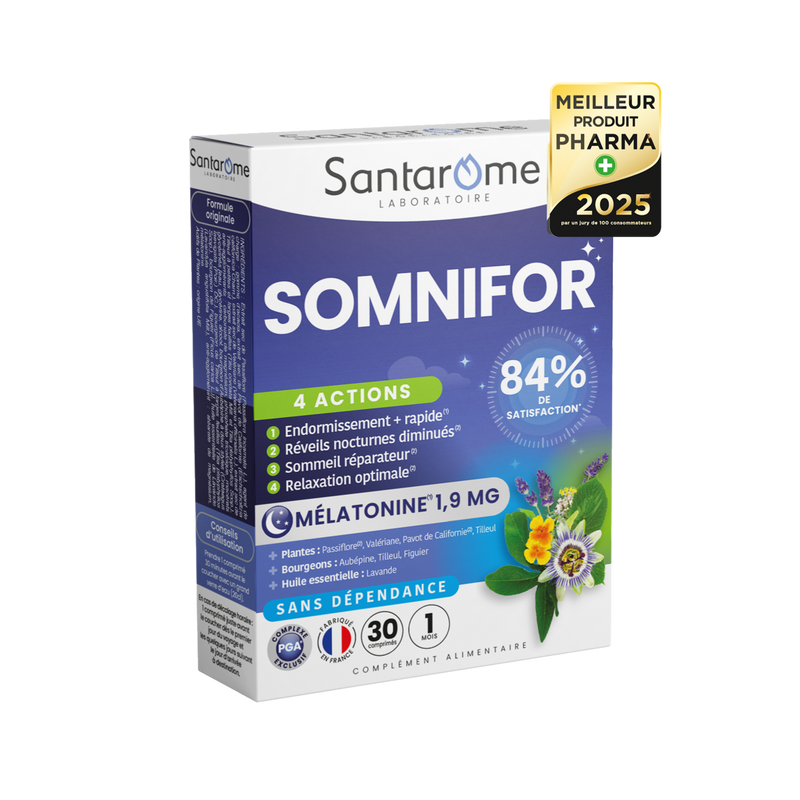
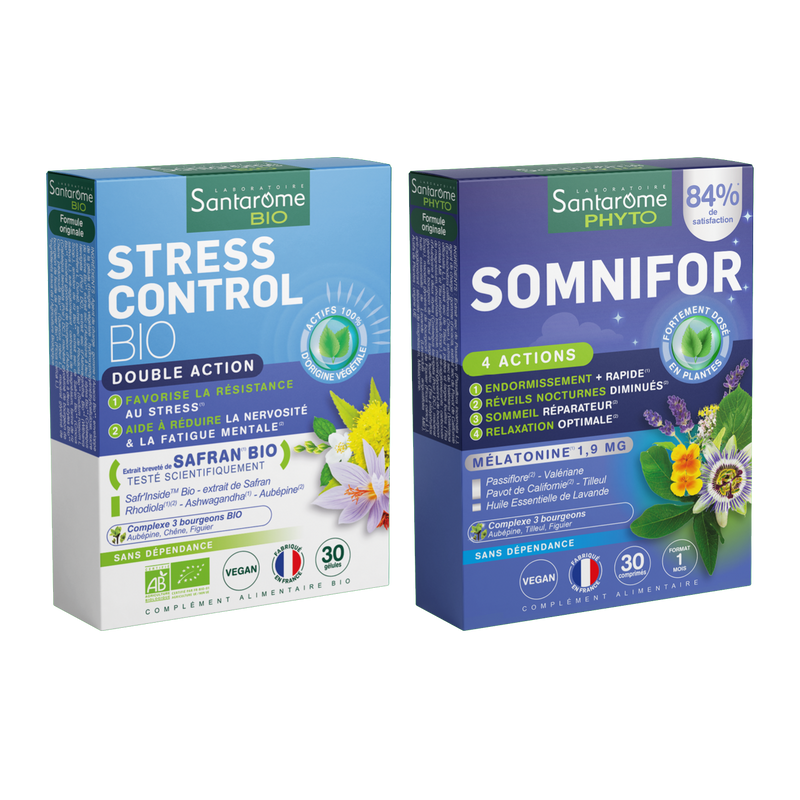
There are natural solutions to help us get a good night's sleep, such as valerian, whose name comes from the Latin "valere," meaning "to be well" or "to be vigorous." It is used to improve overall sleep quality and help reduce the time it takes to fall asleep (2). Alongside valerian,passionflower is known for its relaxing and calming properties (3). It was already being used in Aztec times to calm nervousness!
Finally, let's mention California poppy (or Eschscholtzia), which has calming properties and helps reduce nighttime awakenings (4)(5).
(1)INSV/MGEN survey 2017(2)Houghton PJ. The scientific basis for the reputed activity of Valerian. J Pharm Pharmacol 1999;51:505-12.(3)Grundmann O, Wahling C, Staiger C, Butterweck V. Anxiolytic effects of a passion flower (Passiflora incarnata L.) extract in the elevated plus maze in mice. Pharmazie 2009;64:63-4.(4)POTHIER J. et al., Sedative papaveraceae: the poppy and the California poppy. La Phytothérapie Européenne, Nov-Dec 2003, 17: 25-28. (5)VINCIERI F.F. et al., An approach to the study of the biological activity of Eschscholtzia californica cham. Pharmacological Research Communications, 1988, 20 Suppl 5:41-4